---
# Redesigning enterprise knowledge systems for agentic autonomy
**URL:** https://uat.sigmoid.com/ebooks-whitepapers/redesigning-enterprise-knowledge-systems-for-agentic-autonomy/
Date: 2026-11-18
Author: Joha Momin
Post Type: page
Summary: Redesigning enterprise knowledge systems for agentic autonomy In this whitepaper Introduction Why BI-ready data fails AI agents The six layers of agent-ready...Read More...
---
# Redesigning enterprise knowledge systems for agentic autonomy
In this whitepaper
Introduction
Why BI-ready data fails AI agents
The six layers of agent-ready enterprise knowledge
Business ownership of the knowledge layer
Implementation sequencing
Conclusion
Download PDF
## 1. Introduction
Gartner projects that organizations will abandon 60% of AI projects unsupported by AI-ready data through 2026, for reasons that have little to do with model capability.¹ The data beneath them was never prepared for the work they were asked to do. A second Gartner finding completes the picture: 63% of organizations either lack the data management practices AI requires or cannot tell whether they have them.¹
The pattern repeats across industries. A business unit picks a use case with clear commercial logic, selects a capable model, and builds a proof of concept that performs well enough in controlled conditions to justify going further. Trouble starts when the deployment meets the production data estate. An agent queries two systems that define the same metric differently and reconciles them without registering that a reconciliation was needed. It pulls a policy document that has been superseded twice and treats the guidance as current. It finishes a workflow exactly as documented while missing the exception logic that any experienced practitioner would have applied without being asked. Every output looks like a correct answer, which is what makes the errors so difficult to catch.
The instinct at that point is to go back to the model, and in most cases the model is doing exactly what it was built to do. What enterprises spent the last decade building was [data infrastructure](/data-analytics-strategy/) for human analysts: warehouses for querying, marts feeding dashboards, catalogues helping people find things. Those systems work because they were designed around a consumer who brings institutional context to the data and notices when something looks wrong, but an agent brings neither.
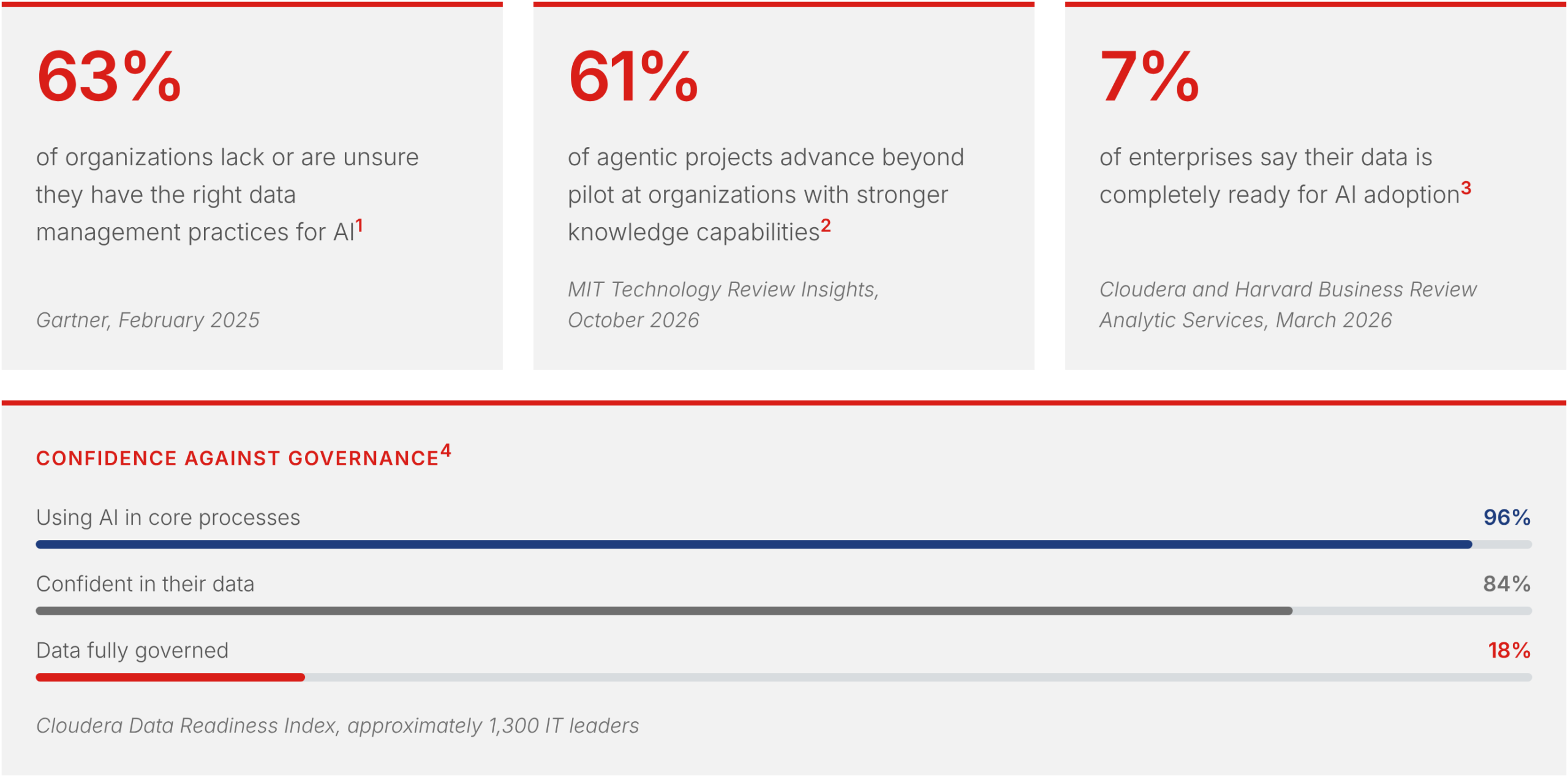
Fig.1: Current state of enterprise data readiness
## 2. Why BI-ready data fails AI agents
An experienced analyst brings far more to a data mart than the query itself. They know that the EMEA revenue figure excludes intercompany transfers, that a customer segment was redefined in the third quarter so comparisons across that boundary need adjusting, and that when two dashboards disagree, one of them carries governance authority. They know that last part because someone mentioned it in a meeting four years ago. None of it appears anywhere in the data, and all of it is needed to read the data correctly.
An [agent has access to none of that context](/blogs/from-stateless-to-personal-how-memory-powers-trustworthy-agentic-ai/). Where an analyst pauses at an ambiguity, an agent resolves it by continuing. The gap shows up most clearly when an agent produces something arithmetically sound and commercially meaningless, like a consolidated figure drawn from two systems measuring entirely different things, delivered with the precision of a correct answer. Errors of that kind tend to surface much later, inside a decision that was already made on the strength of them.
Four dimensions separate what analysts need from data and what agents need from it:
Dimension
Analyst environment
Agent requirement
Structural consistency
Minor inconsistencies are absorbed through domain judgment before they affect a decision
Explicit data contracts and stable schemas, because inconsistencies are acted upon rather than recognized
Semantic richness
Meaning is supplied by the person reading the data
Meaning encoded in the architecture through governed definitions, glossaries, and ontologies that travel with the data
Timeliness
Batch refresh cycles calibrated to reporting rhythms
Near-real-time currency, since an agent reasoning from yesterday's position acts on conditions that have already changed
Discoverability
Navigation through institutional memory and informal networks
Machine-discoverable metadata that requires no insider knowledge of how systems are organized
[Data is agent-ready](/blogs/data-foundation-that-powers-successful-enterprise-ai-agents/) when it is semantically defined, discoverable, current, governed, retrievable, and usable in an operational workflow without depending on context that exists only in someone’s head. An analyst supplies those six properties from experience. An agent needs every one of them built into the architecture.
None of these gaps does much damage while a person reviews AI output before it influences anything. That changes as organizations move from generative systems producing drafts toward agentic systems that plan and execute across multi-step processes. A flawed draft gets corrected on review. A flawed output inside an agentic chain becomes the premise for the next step.
## 3.The six layers of agent-ready enterprise knowledge
Enterprise knowledge does not reside in one place or take one form, and any architecture that treats it as a single category will fail at the boundaries. Structured data in operational systems, unstructured content across document repositories, the judgment held by experienced practitioners, and the analytical logic accumulated in code each present distinct representation problems, and an agent needs all four available inside one reasoning context.
Six layers cover these knowledge types. The first four correspond to the categories above. The fifth supplies the semantic connective tissue that lets an agent move between them. The sixth governs how the knowledge gets activated in production and how it stays trustworthy as conditions change.
Select a layer
LAYER 1Structured knowledge
LAYER 2Unstructured knowledge
LAYER 3Functional knowledge
LAYER 4Codebase knowledge
LAYER 5Semantic unification
LAYER 6Activation and governance
#### Structured knowledge
Tables, data marts, and metric stores made comprehensible to agents through semantic modelling, active catalogues enriched with business glossaries, and canonical certification that settles competing metric definitions across marts.
Fig.2: Six layer knowledge architecture for agent readiness
### 3.1. Structured knowledge
Most enterprises consider this layer settled. Structured data has been governed for two decades, and organizations that invested in it have fair grounds for confidence. That confidence rests on an assumption about who consumes the data, and the assumption has quietly expired.
Data built for analysts carries context that lives outside the schema. The analyst knows which mart is authoritative, which fiscal calendar applies, and which line items a figure includes. An agent querying the same tables has none of that and returns results that are mathematically defensible and commercially wrong.
Three investments close this gap:
- A **semantic modelling layer**, implemented through technologies such as dbt Semantic Layer or Cube, defines each metric once with its full calculation logic, grain, and business context, then exposes that definition consistently to every consuming system. This [removes the failure mode](/blogs/how-to-trust-agentic-bi-when-it-acts-without-being-asked/) in which two agents querying the same table arrive at different interpretations of the same term.
- An **active data catalogue** enriched with business glossaries supplies the metadata that answers what a field means operationally, how current the data is, and who certified it.
- **Canonical certification** then resolves competing definitions across marts and directs agents exclusively to production-approved assets, with uncertified sources architecturally invisible rather than merely inconvenient to reach.
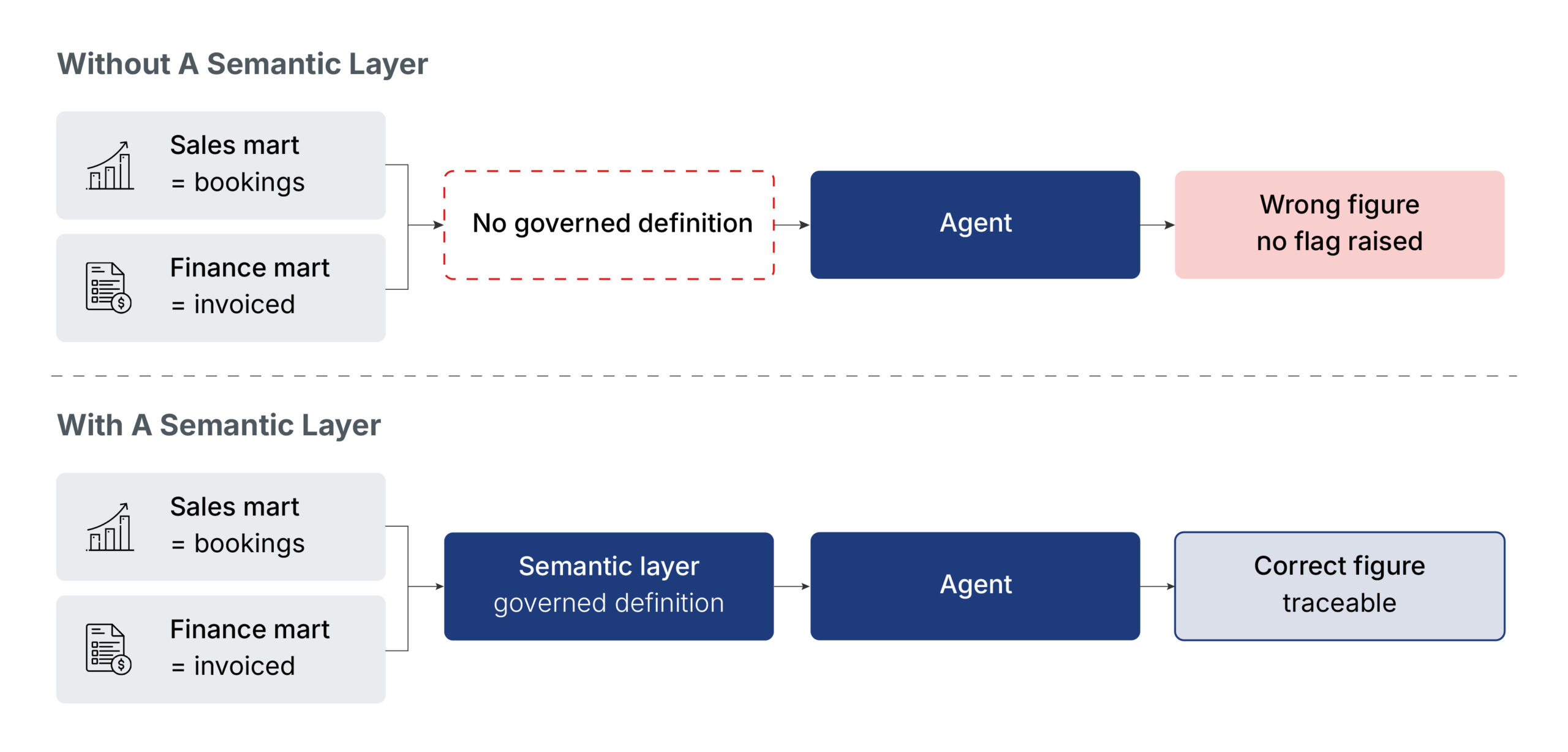
Fig.3: Metric reconciliation with and without a semantic layer
### 3.2. Unstructured knowledge
Structured data, however well governed, accounts for a minority of what an organization knows. Contracts, regulatory submissions, technical manuals, meeting recordings, and process documentation hold institutional intelligence that no warehouse was built to capture. In most enterprises that content is not reachable, with 70% of organizations reporting that less than half of their unstructured data is discoverable and usable for analytics or AI.⁵ Making that content usable by agents means converting it into something a machine can retrieve and reason over, which a well-organized document repository does not do on its own.
Embedding models convert content into representations that support retrieval by meaning instead of keyword, so an agent finds relevant material even when the terminology differs from the query. Retrieval-augmented generation (RAG) grounds agent output in verified organizational content instead of parametric memory, and it remains the main control available for hallucination at production scale. Multimodal processing extends the same treatment to audio, video, and schematics, bringing non-text assets into the knowledge layer alongside everything else.
Curation decides whether this layer helps or harms. Superseded policy documents, near-duplicate procedures, and untagged sensitive material each degrade retrieval quality or create exposure, so four gates operate before anything enters the knowledge pool:
- **Relevance filtering** against defined use cases, so that outdated and tangential material is excluded before an agent can encounter it
- **Automated deduplication** with freshness validation, preventing near-identical versions of the same document from diluting retrieval precision
- **Conflict detection** across sources, surfacing [contradictions for expert resolution](/blogs/building-trustworthy-agentic-ai-starts-with-the-right-guardrails/) rather than leaving an agent to arbitrate between them
- **Sensitivity tagging** at the chunk level, so that access controls are enforced at the point of retrieval rather than applied after content has been surfaced
### 3.3. Functional and tribal knowledge
Documents can at least be found. The third layer covers knowledge that was never written down anywhere.
Functional knowledge is the business rules, exception logic, and operational judgment that experienced people carry without documenting: which regulatory interpretation applies in a given jurisdiction, which departure from standard pricing is sanctioned and by whom, which steps in a procedure are followed as written and which quietly evolved. Research places roughly half of critical operational knowledge in complex organizations in this category, undocumented and dependent on the individuals holding it.
An agent missing this layer does not fail in ways that draw attention. It executes, produces output, and closes the workflow, following instructions precisely while departing from what the business actually intended. Someone downstream has to notice the gap, and often nobody does.
An agent operating without functional knowledge follows instructions literally while violating business intent. The output is internally consistent and operationally wrong, and the divergence tends to surface after the decision has been made.
Codifying this knowledge follows four stages:
- Capture draws on digital adoption platforms, structured interviews, and workflow observation to surface tacit expertise, often revealing that practice has drifted from documented procedure in ways worth recording on their own.
- Structuring converts what was captured into forms an agent can use, including decision trees encoding branching logic, policy graphs formalizing compliance conditions, and ontologies defining how business concepts relate.
- Validation puts domain experts in a formal certification role before anything enters the knowledge base, so the result reflects operative practice instead of an idealized version of it.
- Maintenance treats the output as a living asset, with governance keeping it current as rules and regulations change.
### 3.4. Codebase knowledge
Validated intelligence doesn't live only in people. Forecasting queries tested against actual outcomes, segmentation logic refined over years, risk models validated against historical events, and transformation rules encoding how systems reconcile all sit in repositories and orchestration layers where no agent has a structured way to find them.
An agent asked to forecast demand therefore rebuilds the logic from scratch, without the validation history carried by the version already running in production. The duplicated effort is the smaller cost. The larger one is analytical inconsistency introduced across systems that had previously converged on a common method.
Treating code as a knowledge asset means cataloguing it semantically, documenting which business question each asset answers, what it consumes, what it assumes, and when it applies. Production-validated components move into a curated library agents retrieve from directly, so a forecasting agent uses the organization’s forecasting logic instead of approximating it. [Versioning](/blogs/scaling-enterprise-ai-with-llmops-on-databricks/) ties each asset to the question it was built to answer, keeping agents on current implementations and retiring deprecated logic before it introduces drift.
### 3.5. Semantic unification
Four well-governed layers cover the breadth of what an organization knows, and breadth on its own is not enough. A supply chain agent responding to a delivery disruption needs inventory positions, supplier correspondence, escalation rules, and replenishment logic inside a single reasoning context. Four sequential lookups against unrelated systems will not produce the same answer. Without a layer connecting them through shared meaning, the agent reasons across a fragmented estate and inherits the limits of that fragmentation.
Universal semantic layers are now widely treated as critical enterprise infrastructure, sitting alongside data platforms and cybersecurity in investment priority.
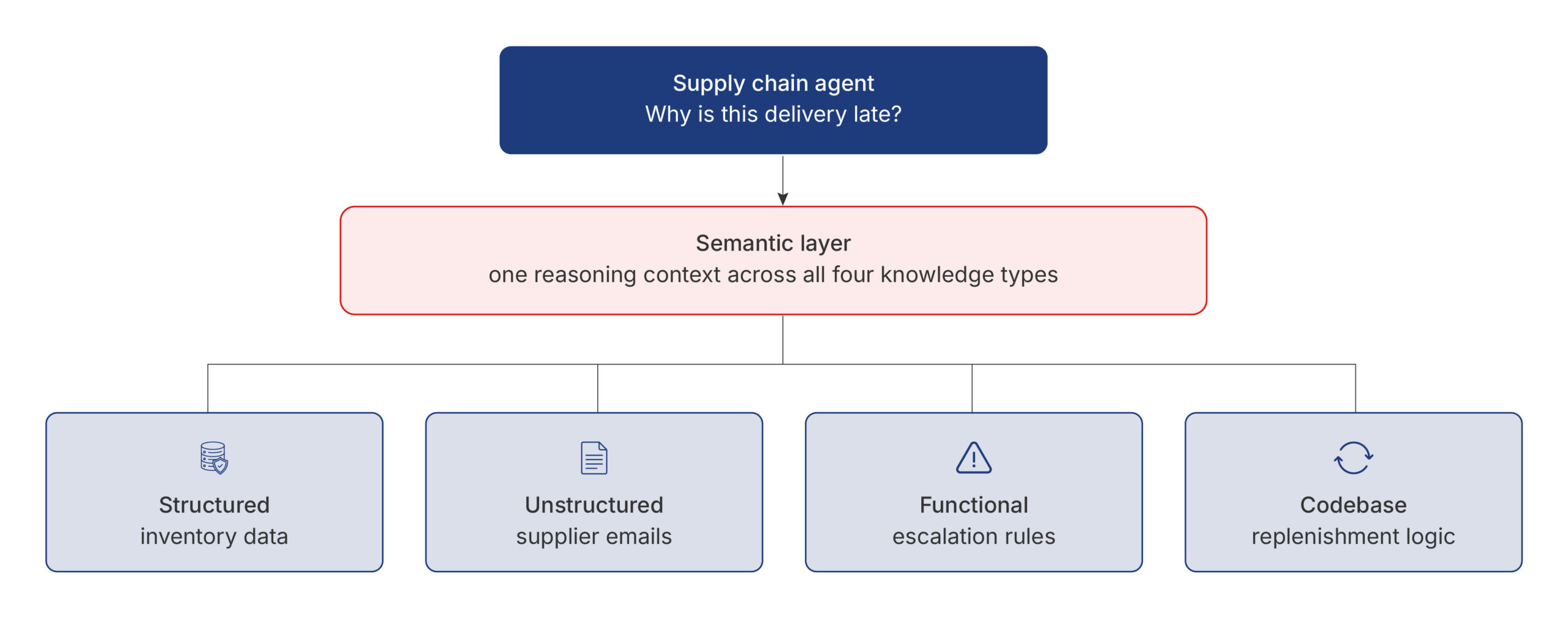
Fig.4: Single-query traversal across four knowledge types
The form this layer takes depends on the reasoning the use case demands. [Knowledge graphs model](/blogs/modernizing-legacy-architectures-using-genai-powered-knowledge-graphs/) relationships between entities explicitly and support the multi-hop reasoning needed to work out whether a supplier delay carries regulatory implications given contract terms, geography, and product category. Vector stores provide semantic depth across unstructured corpora where similarity matters more than exact match. Hybrid GraphRAG architectures combine both, and early implementations in financial services have cut compliance review cycles by traversing structured relationships and unstructured content inside a single query. Neither approach wins categorically, and the selection follows from whether the agent’s primary requirement is relational traversal, semantic similarity, or some combination of the two.
Ontologies supply the formal specification of meaning that holds this together, defining business concepts and their relationships so that an agent querying for a customer entity retrieves the same concept regardless of which system the record came from. The [Model Context Protocol](/blogs/agentic-ai-mesh-the-new-architecture-for-intelligent-business/) (MCP) handles access at inference time, giving agents a consistent interface to governed knowledge without bespoke integration for each deployment.
### 3.6. Activation and governance
A coherent architecture across five layers is necessary for reliable agent behaviour and insufficient on its own. What decides whether the architecture produces trustworthy outcomes is how agents are permitted to use it, and whether governance keeps pace with systems that run continuously.
Activation starts with role definition. Each agent needs an explicit specification of its responsibilities, the layers it may access, and the retrieval scope appropriate to its function. A compliance agent and a commercial planning agent should work against different knowledge environments by design, and role scoping is what prevents boundary violations once several agents operate in the same estate.
Context engineering governs what enters the agent’s reasoning window before processing begins, and enterprise deployments point the same way on this: most hallucinations originate in context, not in the model. The agent was handed conflicting definitions, stale metadata, or uncertified sources, and it reasoned from them with complete confidence.
Most enterprise hallucinations originate in context rather than in the model, which makes the context layer the primary control available for ensuring output quality.
[Data quality](/blogs/agentic-bi-fails-to-scale-without-a-strong-data-engineering-foundation/) works here as a direct input to output reliability. Completeness decides whether reasoning voids exist that the agent fills through inference. Freshness decides whether it acts on current conditions. Where sources conflict, resolution decides whether the agent meets a coherent environment or competing claims to authority. And lineage, the documented trail from source through retrieval to output, is what lets a decision be explained and defended where regulation requires it.
Governance itself needs redesigning for this. Quarterly audits and annual policy reviews were calibrated to the pace of human-supervised decisions and cannot monitor systems running continuously. Policy-aware retrieval enforces access controls before the knowledge store returns results. Sensitivity-aware chunking limits agents to the minimum context their function requires. Continuous automated monitoring surfaces freshness violations, new conflicts, and certification lapses in real time, which moves governance teams off routine checks and onto the exceptions the system raises.
## 4. Business ownership of the knowledge layer
Everything described so far assumes a condition that rarely holds. It assumes the people who hold the knowledge will be available to validate it.
The knowledge that matters the most to agent reliability is also the knowledge that resists codification. Business rules carry exceptions nobody wrote down. Operational judgment reflects conditions that changed three reorganizations ago, and institutional context lives as shared understanding among a handful of people who have been in the function long enough to absorb it. A data team cannot validate any of this, neither can a platform vendor or an external partner. Only the people who own the underlying business process can confirm it, and they are typically the least available participants in any AI initiative.
What follows is predictable. Validation becomes an ad hoc request routed to whoever answers, competing against operational responsibilities that carry clearer accountability and more immediate consequences. Participation feels like a favour to the technology function, and the quality of what gets captured tracks how much time the individual happened to have that week.
Sigmoid met this challenge on a project for a global B2B cocoa and chocolate manufacturer supplying ingredients to food brands in more than thirty countries. The goal was to build an [agentic recommendation engine](/case-studies/product-recommendations-with-ai-agents-improve-sales-by-5/) that could match customer briefs against a portfolio of 20,000+ SKUs, drawing on R&D knowledge built up over decades. The engineering was tractable, establishing who actually held the product knowledge was not. It meant tracing expertise across R&D, technical services, and long-tenured sales teams, then securing enough of their time to confirm that what had been captured reflected how the business genuinely made product decisions. Once identified, those experts were built into the system through a human-in-the-loop mechanism that let them validate outputs in production, which turned validation into a continuing responsibility they could discharge inside their normal workflow.
The organizational answer is a network of Knowledge Champions across business functions, accountable for the knowledge their domain contributes to AI systems. The role covers identifying which knowledge is critical to the use cases in scope, validating captured rules against operative practice, resolving conflicts where documented procedure and actual practice diverge, certifying which version is authoritative, and triggering revalidation when the business changes enough to make existing knowledge obsolete.
Knowledge champion validation cycle
Five stages in sequence: identify critical knowledge, validate against practice, resolve conflicts, certify the authoritative version, and revalidate as the business changes, with a return path from stage five back to stage one.
1
Identify
critical knowledge
2
Validate
against practice
3
Resolve
conflicts
4
Certify
authoritative version
5
Revalidate
as the business changes
continuing responsibility, not a project phase
AAAWgmp1bWIAAAAeanVtZGMycGEAEQAQgAAAqgA4m3EDYzJwYQAAABZcanVtYgAAAEdqdW1kYzJtYQARABCAAACqADibcQN1cm46YzJwYTphY2YxNGRiMS0yMDAxLTRmOTQtYWY0NC1iNzk4NDcxM2RhMjUAAAADl2p1bWIAAAApanVtZGMyYXMAEQAQgAAAqgA4m3EDYzJwYS5hc3NlcnRpb25zAAAAALxqdW1iAAAARGp1bWRjYm9yABEAEIAAAKoAOJtxE2MycGEuaW5ncmVkaWVudC52MwAAAAAYYzJzaM8N9z6VFAPrPH0JW7nOh2YAAABwY2JvcqNpZGM6Zm9ybWF0bWltYWdlL3N2Zyt4bWxqaW5zdGFuY2VJRHgseG1wOmlpZDo3MDc5YTU2NC01ODAyLTQxYjQtOWE0Mi1jMjEwODE4NDM0MDJscmVsYXRpb25zaGlwaHBhcmVudE9mAAAB4mp1bWIAAABBanVtZGNib3IAEQAQgAAAqgA4m3ETYzJwYS5hY3Rpb25zLnYyAAAAABhjMnNoW6P5hypXERRReeL1niEUGAAAAZljYm9yomdhY3Rpb25zgqJmYWN0aW9ua2MycGEub3BlbmVkanBhcmFtZXRlcnOha2luZ3JlZGllbnRzgaJjdXJseC1zZWxmI2p1bWJmPWMycGEuYXNzZXJ0aW9ucy9jMnBhLmluZ3JlZGllbnQudjNkaGFzaFggI+BulzoyMSIAVD5jRfMpwwym7RAVmOy+Cx8wa3XOOT+kZmFjdGlvbngdY29tLmFudGhyb3BpYy5jbGF1ZGUucHJvdmlkZWRqcGFyYW1ldGVyc6F4H2NvbS5hbnRocm9waWMub3JpZ2luLWNvbmZpZGVuY2VndW5rbm93bmtkZXNjcmlwdGlvbnhmQ2xhdWRlIHByb3ZpZGVkIHRoaXMgZmlsZSBhdCB0aGUgcmVxdWVzdCBvZiBhIHVzZXIgYW5kIG1heSBoYXZlIGNyZWF0ZWQgb3IgbW9kaWZpZWQgdGhlIGZpbGUgY29udGVudHMubXNvZnR3YXJlQWdlbnShZG5hbWVmQ2xhdWRlcmFsbEFjdGlvbnNJbmNsdWRlZPUAAADIanVtYgAAAEBqdW1kY2JvcgARABCAAACqADibcRNjMnBhLmhhc2guZGF0YQAAAAAYYzJzaLj5wCihfYiHb3aEpnHhPKwAAACAY2JvcqVjYWxnZnNoYTI1NmNwYWRMAAAAAAAAAAAAAAAAZGhhc2hYICD2YaMFBdVeNfTtIc/vkRHo4NqvupEay2mowFQ++eCrZG5hbWVuanVtYmYgbWFuaWZlc3RqZXhjbHVzaW9uc4GiZXN0YXJ0GRi+Zmxlbmd0aBkeBAAAAj5qdW1iAAAAJ2p1bWRjMmNsABEAEIAAAKoAOJtxA2MycGEuY2xhaW0udjIAAAACD2Nib3KlY2FsZ2ZzaGEyNTZpc2lnbmF0dXJleE1zZWxmI2p1bWJmPS9jMnBhL3VybjpjMnBhOmFjZjE0ZGIxLTIwMDEtNGY5NC1hZjQ0LWI3OTg0NzEzZGEyNS9jMnBhLnNpZ25hdHVyZWppbnN0YW5jZUlEeCx4bXA6aWlkOjMwOWE5N2I3LWMwZDItNDczMi04MDVkLWE5OWU4YTYyZDZkZXJjcmVhdGVkX2Fzc2VydGlvbnODomN1cmx4LXNlbGYjanVtYmY9YzJwYS5hc3NlcnRpb25zL2MycGEuaW5ncmVkaWVudC52M2RoYXNoWCAj4G6XOjIxIgBUPmNF8ynDDKbtEBWY7L4LHzBrdc45P6JjdXJseCpzZWxmI2p1bWJmPWMycGEuYXNzZXJ0aW9ucy9jMnBhLmFjdGlvbnMudjJkaGFzaFggctXrH9yCm7jVNMOlDwBDNtkxZVtFaw1PVS3xFPzotsuiY3VybHgpc2VsZiNqdW1iZj1jMnBhLmFzc2VydGlvbnMvYzJwYS5oYXNoLmRhdGFkaGFzaFggz7/1gcDpDEP6nUjbQtTSeN8DYTy2GQtA7peXGYorqgZ0Y2xhaW1fZ2VuZXJhdG9yX2luZm+jZG5hbWVvQW50aHJvcGljIEZpbGVzZ3ZlcnNpb25lMS4wLjBrc3BlY1ZlcnNpb25lMi40LjAAABA4anVtYgAAAChqdW1kYzJjcwARABCAAACqADibcQNjMnBhLnNpZ25hdHVyZQAAABAIY2JvctKEWQISogEmGCFZAgowggIGMIIBjaADAgECAhRA5aAK7sI50L64g/oGQgU9Z1UTADAKBggqhkjOPQQDAzBJMRcwFQYDVQQKEw5BbnRocm9waWMsIFBCQzEuMCwGA1UEAxMlQW50aHJvcGljIENvbnRlbnQgQ3JlZGVudGlhbHMgUm9vdCBDQTAeFw0yNjA4MDcxODQzNTZaFw0yODA4MDYxOTQzNTZaMEQxFzAVBgNVBAoTDkFudGhyb3BpYywgUEJDMSkwJwYDVQQDEyBBbnRocm9waWMgQ2xhdWRlIENvbnRlbnQgU2lnbmluZzBZMBMGByqGSM49AgEGCCqGSM49AwEHA0IABJh6CmvLUBgFFNU0vUKlOVtE6djd17L5SuwX0LemFisBM3dkd/3cyjxFA3Qo5S46fX0/ihY0VZ7mfb9KF703t5OjWDBWMA4GA1UdDwEB/wQEAwIHgDAVBgNVHSUEDjAMBgorBgEEAYPoXgIBMAwGA1UdEwEB/wQCMAAwHwYDVR0jBBgwFoAUzlHiBIFOZFsj+OPEz5o+nMHXXMIwCgYIKoZIzj0EAwMDZwAwZAIwMXMdFJ4BetLLVY7ORuE9noqbbAZOZn/aArXyTwFAZfKrPzxF2vPoJNf1+UCdg1XGAjBwX1zd9WGqYkqmL5SFqw1QySjr1zJfpJM9+1rdDwSPLMOPOjKuiXjoU/pUUeG9RwmhY3BhZFkNngAAAAAAAAAAAAAAAAAAAAAAAAAAAAAAAAAAAAAAAAAAAAAAAAAAAAAAAAAAAAAAAAAAAAAAAAAAAAAAAAAAAAAAAAAAAAAAAAAAAAAAAAAAAAAAAAAAAAAAAAAAAAAAAAAAAAAAAAAAAAAAAAAAAAAAAAAAAAAAAAAAAAAAAAAAAAAAAAAAAAAAAAAAAAAAAAAAAAAAAAAAAAAAAAAAAAAAAAAAAAAAAAAAAAAAAAAAAAAAAAAAAAAAAAAAAAAAAAAAAAAAAAAAAAAAAAAAAAAAAAAAAAAAAAAAAAAAAAAAAAAAAAAAAAAAAAAAAAAAAAAAAAAAAAAAAAAAAAAAAAAAAAAAAAAAAAAAAAAAAAAAAAAAAAAAAAAAAAAAAAAAAAAAAAAAAAAAAAAAAAAAAAAAAAAAAAAAAAAAAAAAAAAAAAAAAAAAAAAAAAAAAAAAAAAAAAAAAAAAAAAAAAAAAAAAAAAAAAAAAAAAAAAAAAAAAAAAAAAAAAAAAAAAAAAAAAAAAAAAAAAAAAAAAAAAAAAAAAAAAAAAAAAAAAAAAAAAAAAAAAAAAAAAAAAAAAAAAAAAAAAAAAAAAAAAAAAAAAAAAAAAAAAAAAAAAAAAAAAAAAAAAAAAAAAAAAAAAAAAAAAAAAAAAAAAAAAAAAAAAAAAAAAAAAAAAAAAAAAAAAAAAAAAAAAAAAAAAAAAAAAAAAAAAAAAAAAAAAAAAAAAAAAAAAAAAAAAAAAAAAAAAAAAAAAAAAAAAAAAAAAAAAAAAAAAAAAAAAAAAAAAAAAAAAAAAAAAAAAAAAAAAAAAAAAAAAAAAAAAAAAAAAAAAAAAAAAAAAAAAAAAAAAAAAAAAAAAAAAAAAAAAAAAAAAAAAAAAAAAAAAAAAAAAAAAAAAAAAAAAAAAAAAAAAAAAAAAAAAAAAAAAAAAAAAAAAAAAAAAAAAAAAAAAAAAAAAAAAAAAAAAAAAAAAAAAAAAAAAAAAAAAAAAAAAAAAAAAAAAAAAAAAAAAAAAAAAAAAAAAAAAAAAAAAAAAAAAAAAAAAAAAAAAAAAAAAAAAAAAAAAAAAAAAAAAAAAAAAAAAAAAAAAAAAAAAAAAAAAAAAAAAAAAAAAAAAAAAAAAAAAAAAAAAAAAAAAAAAAAAAAAAAAAAAAAAAAAAAAAAAAAAAAAAAAAAAAAAAAAAAAAAAAAAAAAAAAAAAAAAAAAAAAAAAAAAAAAAAAAAAAAAAAAAAAAAAAAAAAAAAAAAAAAAAAAAAAAAAAAAAAAAAAAAAAAAAAAAAAAAAAAAAAAAAAAAAAAAAAAAAAAAAAAAAAAAAAAAAAAAAAAAAAAAAAAAAAAAAAAAAAAAAAAAAAAAAAAAAAAAAAAAAAAAAAAAAAAAAAAAAAAAAAAAAAAAAAAAAAAAAAAAAAAAAAAAAAAAAAAAAAAAAAAAAAAAAAAAAAAAAAAAAAAAAAAAAAAAAAAAAAAAAAAAAAAAAAAAAAAAAAAAAAAAAAAAAAAAAAAAAAAAAAAAAAAAAAAAAAAAAAAAAAAAAAAAAAAAAAAAAAAAAAAAAAAAAAAAAAAAAAAAAAAAAAAAAAAAAAAAAAAAAAAAAAAAAAAAAAAAAAAAAAAAAAAAAAAAAAAAAAAAAAAAAAAAAAAAAAAAAAAAAAAAAAAAAAAAAAAAAAAAAAAAAAAAAAAAAAAAAAAAAAAAAAAAAAAAAAAAAAAAAAAAAAAAAAAAAAAAAAAAAAAAAAAAAAAAAAAAAAAAAAAAAAAAAAAAAAAAAAAAAAAAAAAAAAAAAAAAAAAAAAAAAAAAAAAAAAAAAAAAAAAAAAAAAAAAAAAAAAAAAAAAAAAAAAAAAAAAAAAAAAAAAAAAAAAAAAAAAAAAAAAAAAAAAAAAAAAAAAAAAAAAAAAAAAAAAAAAAAAAAAAAAAAAAAAAAAAAAAAAAAAAAAAAAAAAAAAAAAAAAAAAAAAAAAAAAAAAAAAAAAAAAAAAAAAAAAAAAAAAAAAAAAAAAAAAAAAAAAAAAAAAAAAAAAAAAAAAAAAAAAAAAAAAAAAAAAAAAAAAAAAAAAAAAAAAAAAAAAAAAAAAAAAAAAAAAAAAAAAAAAAAAAAAAAAAAAAAAAAAAAAAAAAAAAAAAAAAAAAAAAAAAAAAAAAAAAAAAAAAAAAAAAAAAAAAAAAAAAAAAAAAAAAAAAAAAAAAAAAAAAAAAAAAAAAAAAAAAAAAAAAAAAAAAAAAAAAAAAAAAAAAAAAAAAAAAAAAAAAAAAAAAAAAAAAAAAAAAAAAAAAAAAAAAAAAAAAAAAAAAAAAAAAAAAAAAAAAAAAAAAAAAAAAAAAAAAAAAAAAAAAAAAAAAAAAAAAAAAAAAAAAAAAAAAAAAAAAAAAAAAAAAAAAAAAAAAAAAAAAAAAAAAAAAAAAAAAAAAAAAAAAAAAAAAAAAAAAAAAAAAAAAAAAAAAAAAAAAAAAAAAAAAAAAAAAAAAAAAAAAAAAAAAAAAAAAAAAAAAAAAAAAAAAAAAAAAAAAAAAAAAAAAAAAAAAAAAAAAAAAAAAAAAAAAAAAAAAAAAAAAAAAAAAAAAAAAAAAAAAAAAAAAAAAAAAAAAAAAAAAAAAAAAAAAAAAAAAAAAAAAAAAAAAAAAAAAAAAAAAAAAAAAAAAAAAAAAAAAAAAAAAAAAAAAAAAAAAAAAAAAAAAAAAAAAAAAAAAAAAAAAAAAAAAAAAAAAAAAAAAAAAAAAAAAAAAAAAAAAAAAAAAAAAAAAAAAAAAAAAAAAAAAAAAAAAAAAAAAAAAAAAAAAAAAAAAAAAAAAAAAAAAAAAAAAAAAAAAAAAAAAAAAAAAAAAAAAAAAAAAAAAAAAAAAAAAAAAAAAAAAAAAAAAAAAAAAAAAAAAAAAAAAAAAAAAAAAAAAAAAAAAAAAAAAAAAAAAAAAAAAAAAAAAAAAAAAAAAAAAAAAAAAAAAAAAAAAAAAAAAAAAAAAAAAAAAAAAAAAAAAAAAAAAAAAAAAAAAAAAAAAAAAAAAAAAAAAAAAAAAAAAAAAAAAAAAAAAAAAAAAAAAAAAAAAAAAAAAAAAAAAAAAAAAAAAAAAAAAAAAAAAAAAAAAAAAAAAAAAAAAAAAAAAAAAAAAAAAAAAAAAAAAAAAAAAAAAAAAAAAAAAAAAAAAAAAAAAAAAAAAAAAAAAAAAAAAAAAAAAAAAAAAAAAAAAAAAAAAAAAAAAAAAAAAAAAAAAAAAAAAAAAAAAAAAAAAAAAAAAAAAAAAAAAAAAAAAAAAAAAAAAAAAAAAAAAAAAAAAAAAAAAAAAAAAAAAAAAAAAAAAAAAAAAAAAAAAAAAAAAAAAAAAAAAAAAAAAAAAAAAAAAAAAAAAAAAAAAAAAAAAAAAAAAAAAAAAAAAAAAAAAAAAAAAAAAAAAAAAAAAAAAAAAAAAAAAAAAAAAAAAAAAAAAAAAAAAAAAAAAAAAAAAAAAAAAAAAAAAAAAAAAAAAAAAAAAAAAAAAAAAAAAAAAAAAAAAAAAAAAAAAAAAAAAAAAAAAAAAAAAAAAAAAAAAAAAAAAAAAAAAAAAAAAAAAAAAAAAAAAAAAAAAAAAAAAAAAAAAAAAAAAAAAAAAAAAAAAAAAAAAAAAAAAAAAAAAAAAAAAAAAAAAAAAAAAAAAAAAAAAAAAAAAAAAAAAAAAAAAAAAAAAAAAAAAAAAAAAAAAAAAAAAAAAAAAAAAAAAAAAAAAAAAAAAAAAAAAAAAAAAAAAAAAAAAAAAAAAAAAAAAAAAAAAAAAAAAAAAAAAAAAAAAAAAAAAAAAAAAAAAAAAAAAAAAAAAAAAAAAAAAAAAAAAAAAAAAAAAAAAAAAAAAAAAAAAAAAAAAAAAAAAAAAAAAAAAAAAAAAAAAAAAAAAAAAAAAAAAAAAAAAAAAAAAAAAAAAAAAAAAAAAAAAAAAAAAAAAAAAAAAAAAAAAAAAAAAAAAAAAAAAAAAAAAAAAAAAAAAAAAAAAAAAAAAAAAAAAAAAAAAAAAAAAAAAAAAAAAAAAAAAAAAAAAAAAAAAAAAAAAAAAAAAAAAAAAAAAAAAAAAAAAAAAAAAAAAAAAAAAAAAAAAAAAAAAAAAAAAAAAAAAAAAAAAAAAAAAAAAAAAAAAAAAAAAAAAAAAAAAAAAAAAAAAAAAAAAAAAAAAAAAAAAAAAAAAAAAAAAAAAAAAAAAAAAAAAAAAAAAAAAAAAAAAAAAAAAAAAAAAAAAAAAAAAAAAAAAAAAAAAAAAAAAAAAAAAAAAAAAAAAAAAAAAAAAAAAAAAAAAAAAAAAAAAAAAAAAAAAAAAAAAAAAAAAAAAAAAAAAAAAAAAAAAAAAAAAAAAAAAAAAAAAAAAAAAAAAAAAAAAAAAAAAAAAAAAAAAAAAAAAAAAAAAAAAAAAAAAAAAAAAAAAAAAAAAAAAAAAAAAAAAAAAAAAAAAAAAAAAAAAAAAAAAAAAAAAAAAAAAAAAAAAAAAAAAAAAAAAAAAAAAAAAAAAAAAAAAAAAAAAAAAAAAAAAAAAAAAAAAAAAAAAAAAAAAAAAAAAAAAAAAAAAAAAAAAAAAAAAAAAAAAAAAAAAAAAAAAAAAAAAAAAAAAAAAAAAAAAAAAAAAAAAAAAAAAAAAAAAAAAAAAAAAAAAAAAAAAAAAAAAAAAAAAAAAAAAAAAAAAAAAAAAAAAAAAAAAAAAAAPZYQPPJ08KJojN34epUFdDSno942owrAPFbNXo/dbnV9/ZkPcOi+oTdPoyG64KSCPcuCpURAGX9d5NGyNQYGcDKkk0=
Fig.5: Knowledge champion validation cycle
Leadership sponsorship is what makes this work. Where organizations have succeeded, knowledge validation is written into the operating model for AI, with allocated capacity, defined decision rights, and knowledge stewardship recognized as part of the role. Left as voluntary support for a technology project, it decays as soon as the project team stops asking.
The objective is a mechanism through which business expertise becomes a governed, reusable enterprise asset that outlasts the individuals who contributed it. That does not require every subject matter expert to maintain a knowledge base. It does require that the people who own the knowledge be given the mandate, the time, and the incentives to validate it.
## 5. Implementation sequencing
With ownership established, the question becomes where to start. Building all six layers to production quality across an entire data estate is substantial work, and the most common failure in enterprise AI is pilot purgatory, where initiatives launch either so broad that they stall under their own weight or so narrow that they never connect to the production environment.
Sigmoid sequences the knowledge architecture around what the agent needs to do its job. If a [supply chain forecasting agent](/blogs/rise-of-agentic-ai-enabled-supply-chain-networks-in-consumer-goods/) requires high-integrity structured metrics and codebase-level logic, those are the layers built to production grade first. The approach compounds as it goes, because each deployment hardens a portion of the data estate and the decision logic codified along the way becomes a reusable building block for the next agent.
Sustaining the semantic architecture takes three engineering disciplines:
- Automated refresh pipelines that keep knowledge synchronized as sources, business rules, and regulations change
- Feedback loops that route agent failures back into maintenance, treating those failures as the most precise diagnostic available for locating gaps in the knowledge base
- Temporal versioning that preserves historical states, so agents reasoning across time periods do not conflate past conditions with present ones
### 5.1. Knowledge maturity and evaluation
Sequencing knowledge work around use cases raises two questions that come up in every programme, and both have practical answers.
Sufficiency is measured against the agent’s defined scope. A knowledge layer is sufficient when the agent completes the tasks it has been assigned without resorting to inference to fill gaps. The working test is a set of representative queries the agent must handle correctly, agreed with business owners before build and expanded as scope widens. Coverage then gets assessed against that set, because the total count of available assets tells you nothing useful about whether a specific agent can do its job.
Correctness needs an evaluation set built by the same experts who validated the knowledge in the first place. A gold-standard collection of inputs with expert-agreed outputs gives a benchmark for measuring agent performance before deployment and at intervals afterward. Divergence over time signals one of two things: knowledge that has drifted from current practice, or a business that has changed faster than its knowledge layer. Both call for revalidation by the relevant Knowledge Champion.
Maturity moves through four observable states. Knowledge gets captured, then validated by its owners, then governed with versioning and certification in place, and finally becomes self-correcting once production feedback loops route agent failures back to the people accountable for resolving them.
Select a dimension
Coverage
Freshness
Conflict density
Retrieval precision
Lineage completeness
Whether an agent retrieves the correct certified asset on its first attempt. Low precision degrades quality at every step of multi-hop reasoning and is the clearest measurable precursor to hallucination. It also gets misattributed to model capability more often than to the knowledge architecture retrieval runs against.
Fig.6: Five dimensions of knowledge readiness
## 6. Conclusion
Across organizations that have put agents into production with real discipline, the post-implementation analysis tends to land in the same place. Models were rarely the variable separating success from failure, and platforms were largely equivalent between them. What differed was the quality, coherence, and governance of the knowledge those agents could reach. The organizations that succeeded had treated knowledge architecture as a strategic investment before the first deployment, with the rigour they would bring to any production system of comparable consequence.
This kind of architecture compounds in a way most technology investment does not. Every certified asset, codified rule, and catalogued function becomes available to the next deployment instead of being rebuilt for it. Models are available to anyone who wants them. The organizational knowledge that lets a model reason accurately inside a specific commercial context belongs only to the enterprise that built the architecture to surface it.
Agents do not fail because models are inadequate. They fail because the knowledge foundation beneath them was never built. Enterprises that recognize this early, and act on it with the seriousness they bring to capital allocation and talent strategy, will set what [competitive advantage from AI](/enterprise-ai-strategy/) looks like over the coming decade.
**Data readiness is where the AI strategy succeeds or fails.**
## References
- Gartner, “Lack of AI-Ready Data Puts AI Projects at Risk,” February 26, 2025. Based on a July 2024 survey of 1,203 data management leaders. [gartner.com](https://www.gartner.com/en/newsroom/press-releases/2025-02-26-lack-of-ai-ready-data-puts-ai-projects-at-risk)
- MIT Technology Review Insights, “Connecting AI agents to enterprise knowledge,” October 5, 2026. Based on a survey of 300 data, AI and technology executives. [technologyreview.com](https://www.technologyreview.com/2026/10/05/1145580/connecting-ai-agents-to-enterprise-knowledge/)
- Cloudera and Harvard Business Review Analytic Services, Taming the Complexity of AI Data Readiness, March 5, 2026. [cloudera.com](https://www.cloudera.com/about/news-and-blogs/press-releases/2026-03-05-only-7-percent-of-enterprises-say-their-data-is-completely-ready-for-ai-according-to-new-report-from-cloudera-and-harvard-business-review-analytic-services-reveals.html)
- Cloudera, The Data Readiness Index: Understanding the Foundations for Successful AI, April 14, 2026. Survey of approximately 1,300 global IT leaders. [cloudera.com](https://www.cloudera.com/about/news-and-blogs/press-releases/2026-04-14-nearly-80-percent-of-enterprises-say-ai-is-held-back-by-data-access-challenges-cloudera-report-finds.html)
- BARC, Harnessing Unstructured Data for AI Innovation: Problems, Practices, and Principles for Success, June 2026. Based on a survey of approximately 220 data, analytics and AI leaders. [barc.com](https://barc.com/research/harnessing-unstructured-data-for-ai-innovation/)
## Authored by:
**Vijendra Jain** is a Principal Data Scientist at Sigmoid with over 11 years of experience in architecting and delivering data science and AI solutions. He brings deep expertise across CPG, retail, and manufacturing, specializing in data harmonization, production-grade AI agents, and scalable AI-driven solutions that solve complex business problems. He has a strong track record of translating business needs into impactful AI solutions, enabling data-driven decision-making, developing intelligent recommendation systems, and deploying scalable machine learning models that deliver measurable business value.
**Amit Kumar Gupta** is an Engineering Manager at Sigmoid with close to 14 years of experience in data engineering, solution architecture, and cloud data platform modernization across CPG, retail, manufacturing, and energy and utilities. He specializes in Databricks, AWS, Azure, and Snowflake, designing scalable data platforms that enable analytics, governance, and AI-driven business outcomes. He leads a team of over 30 engineers and contributes to Sigmoid's Data Engineering and Databricks CoEs, building reusable accelerators and architectural best practices that combine deep technical expertise with customer engagement and engineering leadership.
[lc_get_post post_type="lc_section" slug="redesigning-enterprise-knowledge-systems-for-agentic-autonomy-cta"]
---
## Navigation
- [Company](/about-sigmoid)
- [Newsroom](/newsroom)
- [Life at Sigmoid](/careers)
- [Takshashila](/takshashila)
- [Contact Us](/contact-us)
- [AI Strategy Blueprint your AI advantage](/enterprise-ai-strategy/)
- [Generative AI Drive innovation with Generative AI](/generative-ai/)
- [Responsible AI Build trust with ethical AI practices](/responsible-ai-in-enterprise/)
- [Agentic AI Reshape business with scalable agentic systems](/agentic-ai-solutions/)
- [AI Managed Services Ensure reliable AI performance](/ai-managed-services/)
- [Advanced Analytics Transform your business with data-driven insights](/advanced-data-analytics-solutions/)
- [Download whitepaper](/ebooks-whitepapers/the-new-qsr-playbook-transforming-menu-strategy-into-a-growth-engine/)
- [Data Strategy Strong data foundations for scalable AI](/data-analytics-strategy/)
- [Data Management Leverage data as a strategic asset](/ai-data-management-services/)
- [DataOps Automate data for speed and quality](/data-devops/)
- [Forward Deployed Engineering Scale enterprise AI with FDEs & specialized agents](/forward-deployed-engineering/)
- [Data Engineering Deliver insights faster with scalable pipelines](/data-engineering/)
- [Cloud Transformation Modernize data to maximise efficiency](/cloud-migration/)
- [Download whitepaper](/ebooks-whitepapers/building-data-products-in-a-data-mesh-to-drive-business-value/)
- [Data Modeling Structure data for better decisions](/data-modeling-services/)
- [Data Visualization Transform data into actionable stories](/data-visualization-service/)
- [BI Migration Enhance decision making with modern BI tools](/bi-migration/)
- [Data Observability Build trust with healthy, accurate data](/data-observability/)
- [Automated Insights Make smarter decisions with auto-generated insights](/automated-insights/)
- [Download whitepaper](/ebooks-whitepapers/how-cognitive-bi-drives-an-intelligent-enterprise/)
- [CPG & Retail End-to-end analytics for planning, operations, and commercial excellence](/industries/cpg-analytics/)
- [Life Sciences Trusted intelligence across clinical, commercial, and operational workflows](/industries/life-sciences/)
- [Banking & Financial Services AI-powered analytics for risk, compliance and customer experience](/industries/banking-financial-analytics-services/)
- [Insurance Modernize core insurance platforms and unlock new revenue streams with AI](/industries/insurance-reimagined-with-ai/)
- [Download infographic](/wp-content/uploads/2026/03/Infographic_Maturity-Framework-for-Scaling-Agentic-AI.pdf)
- [Helios Turn marketing data into measurable business outcomes](/marketing-suite-helios/)
- [Stratos AI-powered platform for resilient supply chains](/supply-chain-stratos/)
- [DataGuard Agentic AI platform for data quality and governance](/data-quality-dataguard/)
- [Financial transformation with Agentic AI Agent-led automation for enterprise and GBS finance](/financial-transformation-with-agentic-ai/)
- [MediaIQ Advanced platform for in-flight marketing measurement](/accelerators/sigmoid-mediaiq-multi-touch-attribution-tool/)
- [CampaignIQ AI-driven platform for optimized campaign budget allocation](/accelerators/sigmoid-campaigniq/)
- [AssistBot GenAI email assistant that automates human-like responses](/accelerators/sigmoid-assistbot-for-ai-email-assistant/)
- [CreativeBot GenAI tool for personalized and brand-aligned creative design](/accelerators/sigmoid-creativebot/)
- [SocialBot GenAI platform to analyze digital conversations and trends](/accelerators/#marketing|socialbot)
- [DemandIQ Predict trends accurately and optimize inventory management](/accelerators/sigmoid-demandiq/)
- [NetworkIQ Track and optimize logistics operations in real-time to quickly address disruptions](/accelerators/sigmoid-networkiq/)
- [SupplyIQ End-to-end platform to optimize supply chain operations](/accelerators/sigmoid-supplyiq/)
- [ProcurementIQ Automated procurement operations for maximum savings, compliance and efficiency](/accelerators/sigmoid-procurementiq/)
- [RapidML Accelerated deployment for machine learning models](/accelerators/sigmoid-rapidml/)
- [DataGuard Comprehensive platform for proactive data quality management](/accelerators/data-quality-tool-sigmoid-dataguard/)
- [CloudPulse Cloud cost optimization platform with multi-cloud management](/accelerators/sigmoid-cloudpulse/)
- [RAPID GenAI foundation with built-in governance and cost clarity](/accelerators/sigmoid-rapid/)
- [AnalyticsBot Conversational analytics for faster business decisions](/accelerators/sigmoid-analyticsbot/)
- [DataConnect Seamlessly ingest, integrate and harmonize data from diverse sources](/accelerators/sigmoid-dataconnect/)
- [Reconica AI-powered data harmonization and reconciliation engine](/accelerators/sigmoid-reconica/)
- [ConverseBot GenAI driven insights generation for automated insights from reports](/accelerators/#sales|conversebot)
- [iNRM Cross-lever revenue growth optimization platform](/accelerators/sigmoid-inrm/)
- [AssortmentIQ Optimize shelf layouts and assortment mix at scale with AI-based insights](/accelerators/sigmoid-assortmentiq/)
- [Read whitepaper](/ebooks-whitepapers/building-agentic-ai-chatbots-for-business-process-transformation/)
- [Listen Podcast](/events/podcast/how-jack-in-the-box-is-redefining-personalization-and-supply-chain-with-ai/)
- [Blogs](/blogs/)
- [White Papers](/ebooks-whitepapers/)
- [Case Studies](/case-studies/)
- [Podcast](/events/podcast/#Podcasts)
- [Download case study](/case-studies/ai-based-dynamic-targeting-and-personalized-hcp-engagement-for-pharma-marketing/)
- [ConverseBot](/accelerators/#sales|conversebot/)
---
## Footer Links
- [Talk to our AI experts](/contact-us/)
- [AI Strategy](/enterprise-ai-strategy/)
- [Agentic AI](/agentic-ai-solutions/)
- [Generative AI](/generative-ai/)
- [AI Managed Services](/ai-managed-services/)
- [Responsible AI](/responsible-ai-in-enterprise/)
- [Advanced Analytics](/advanced-data-analytics-solutions/)
- [Data Strategy](/data-analytics-strategy//)
- [Data Engineering](/data-engineering/)
- [Data Management](/ai-data-management-services/)
- [Cloud Transformation](/cloud-transformation/)
- [DataOps](/data-devops/)
- [Forward Deployed Engineering](/forward-deployed-engineering/)
- [Data Visualization](/data-visualization-service/)
- [Automated Insights](/automated-insights/)
- [BI Migration](/bi-migration/)
- [Data Modeling](/data-modeling-services/)
- [Data Observability](/data-observability/)
- [CPG & Retail](/industries/cpg-analytics/)
- [Life Sciences](/industries/life-sciences/)
- [Banking & Financial Services](/industries/banking-financial-analytics-services/)
- [Insurance](/industries/insurance-reimagined-with-ai/)
- [Case Studies](/case-studies/)
- [Thought Leadership](/ebooks-whitepapers/)
- [Blogs](/blogs/)
- [Helios](/marketing-suite-helios/)
- [Stratos](/supply-chain-stratos/)
- [DataGuard](/data-quality-dataguard/)
- [Company](/about-sigmoid/)
- [Newsroom](/newsroom/)
- [Accelerators](/accelerators/)
- [Careers](/careers/)
- [Privacy Policy |](/privacy-policy/)
- [Cookie Policy](/cookie-policy/)